

Curtesy DANICA KIRKA Associated Press and STEFANIE DAZIO Associated Press
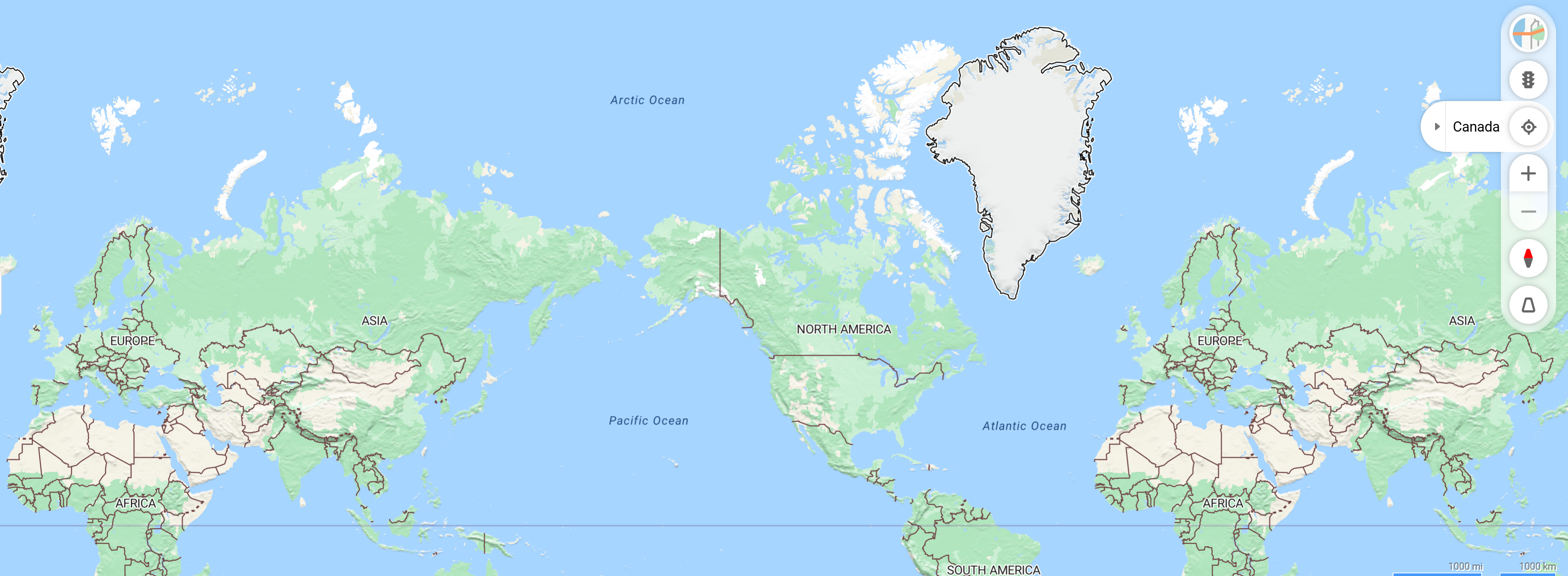
Location, location, location: Greenland’s position above the Arctic Circle makes the world’s largest island a key part of security strategy.
Increasing international tensions, global warming and the changing world economy have put Greenland at the heart of the debate over global trade and security, and U.S. President Donald Trump wants to make sure his country controls the mineral-rich island that guards the Arctic and North Atlantic approaches to North America.
Greenland is a self-governing territory of Denmark, a longtime U.S. ally that has rejected Trump’s overtures. Greenland’s own government also opposes U.S. designs on the island, saying the people of Greenland will decide their own future.
The island, 80% of which lies above the Arctic Circle, is home to about 56,000 mostly Inuit people who until now have been largely ignored by the rest of the world.
Here’s why Greenland is strategically important to Arctic security:
Greenland sits off the northeastern coast of Canada, with more than two-thirds of its territory lying within the Arctic Circle. That has made it crucial to the defense of North America since World War II, when the U.S. occupied Greenland to ensure it didn’t fall into the hands of Nazi Germany and to protect crucial North Atlantic shipping lanes.
Following the Cold War, the Arctic was largely an area of international cooperation. But climate change is thinning the Arctic ice, promising to create a northwest passage for international trade and reigniting competition with Russia, China and other countries over access to the region’s mineral resources.
In 2018, China declared itself a “near-Arctic state” in an effort to gain more influence in the region. China has also announced plans to build a “Polar Silk Road” as part of its global Belt and Road Initiative, which has created economic links with countries around the world.
Then U.S. Secretary of State Mike Pompeo rejected China’s move, saying: “Do we want the Arctic Ocean to transform into a new South China Sea, fraught with militarization and competing territorial claims?”
Meanwhile, Russia has sought to assert its influence over wide areas of the Arctic in competition with the U.S., Canada, Denmark and Norway. Moscow has also sought to boost its military presence in the polar region, home to its Northern Fleet and a site where the Soviet Union tested nuclear weapons. Russian military officials have said that the site is ready for resuming the tests, if necessary.
Russia’s military has been restoring old Soviet infrastructure in the Arctic and building new facilities. Since 2014, the Russian military has opened several military bases in the Arctic and worked on reconstructing airfields.
European leaders’ concerns have been heightened since Russia launched a war in Ukraine on Feb. 24, 2022.
Last year, Russian President Vladimir Putin noted that Moscow is worried about NATO’s activities in the Arctic and will respond by strengthening the capability of its armed forces there. But he said that Moscow was holding the door open to broader international cooperation in the region.
The U.S. Department of Defense operates the remote Pituffik Space Base in northwestern Greenland, which was built after the U.S. and Denmark signed the Defense of Greenland Treaty in 1951. It supports missile warning, missile defense and space surveillance operations for the U.S. and NATO.
Greenland also guards part of what is known as the GIUK (Greenland, Iceland, United Kingdom) Gap, where NATO monitors Russian naval movements in the North Atlantic.
Thomas Crosbie, an associate professor of military operations at the Royal Danish Defense College, said that an American takeover wouldn’t improve upon Washington’s current security strategy.
“The United States will gain no advantage if its flag is flying in Nuuk (Greenland’s capital) versus the Greenlandic flag,” he told The Associated Press. “There’s no benefits to them because they already enjoy all of the advantages they want.
“If there’s any specific security access that they want to improve American security, they’ll be given it as a matter of course, as a trusted ally. So this has nothing to do with improving national security for the United States.”
Denmark’s parliament approved a bill last June to allow U.S. military bases on Danish soil. It widened a previous military agreement, made in 2023 with the Biden administration, where U.S. troops had broad access to Danish air bases in the Scandinavian country.
Danish Foreign Minister Lars Løkke Rasmussen, in a response to lawmakers’ questions, wrote over the summer that Denmark would be able to terminate the agreement if the U.S. tries to annex all or part of Greenland.
Denmark is moving to strengthen its military presence around Greenland and in the wider North Atlantic. Last year, the government announced a roughly 14.6 billion-kroner ($2.3 billion) agreement with parties including the governments of Greenland and the Faroe Islands, another self-governing territory of Denmark, to “improve capabilities for surveillance and maintaining sovereignty in the region.”
The plan includes three new Arctic naval vessels, two additional long-range surveillance drones and satellite capacity.
Denmark’s Joint Arctic Command is headquartered in Nuuk, and tasked with the “surveillance, assertion of sovereignty and military defense of Greenland and the Faroe Islands,” according to its website. It has smaller satellite stations across the island.
The Sirius Dog Sled Patrol, an elite Danish naval unit that conducts long-range reconnaissance and enforces Danish sovereignty in the Arctic wilderness, is also stationed in Greenland.
Greenland is also a rich source of the so-called rare earth minerals that are a key component of cellphones, computers, batteries and other high-tech gadgets that are expected to power the world’s economy in the coming decades.
That has attracted the interest of the U.S. and other Western powers as they try to ease China’s dominance of the market for these critical minerals.
Development of Greenland’s mineral resources is challenging because of the island’s harsh climate, while strict environmental controls have proved an additional hurdle for potential investors.
Early cultures
Various peoples have crossed to northwest Greenland from North America, using the islands of the Canadian Arctic as stepping stones, in a series of migrations that stretched from at least 2500 bce to the early 2nd millennium ce. Each wave of migration represented different cultures. Several distinct cultures are known, including the pre-Inuit cultures classified as Independence I (c. 2500–1800 bce), Saqqaq (c. 2300–900 bce), Independence II (c. 1200–700 bce), Dorset I (c. 600 bce–100 ce), and Dorset II (c. 700–1200). The most recent arrival was the Inuit Thule culture (c. 1100), from which the Inugsuk culture developed during the 12th and 13th centuries.
Erik the Red and Norse settlements
In 982 the Norwegian Erik the Red, who had been banished from Iceland for manslaughter, settled on the island today known as Greenland. Returning to Iceland about 985, he described the merits of the newly discovered land, which he called Greenland, and in 986 he organized an expedition to the island that resulted in the development of two main settlements: the East Settlement, near present-day Qaqortoq (Julianehåb), and the West Settlement, near present-day Nuuk (Godthåb). These settlements may have reached a population of 3,000–6,000 on about 280 farms, suggesting that temperatures at that time may have been as warm or warmer than they are today. Christianity arrived in the 11th century by way of Erik’s son Leif Eriksson, who had just returned from the recently Christianized Norway. A bishop’s seat was established in Greenland in 1126.
Beginning sometime in the 13th century, the Norse (Scandinavian) settlers began to interact with the expanding Inuit Thule culture that had appeared in northern Greenland about 1100. But in the 14th century the Norse settlements declined, perhaps as a result of a cooling in Greenland’s climate. In the 15th century they ceased to be inhabited.
Danish rule
During the 16th and 17th centuries Dutch and English whalers frequently traveled in the seas around Greenland, and occasionally they interacted with the local population. However, no further attempt at colonization was made until 1721, when Hans Egede, with the permission of the united kingdom of Denmark–Norway, founded a trading company and a Lutheran mission near present-day Nuuk, thus marking the real beginning of Greenland’s colonial era. In 1776 the Danish government assumed a full monopoly of trade with Greenland, and the Greenland coast was closed to foreign access; it was not reopened until 1950. During this period Denmark tried gradually to acclimatize the Greenlanders to the outside world without exposing them to the danger of economic exploitation.
Greenland fell under the protection of the United States during the German occupation of Denmark in World War II and was returned to Denmark in 1945. Following the war, Denmark responded to Greenlanders’ complaints over its administration of the island. The monopoly of the Royal Greenland Trading Company was abolished in 1951, and, after Greenland became an integral part of the Kingdom of Denmark in 1953, reforms were undertaken to improve the local economy, transportation systems, and the educational system. Denmark granted home rule to the island on May 1, 1979.
Increasing autonomy and the question of independence
At the start of the 21st century, there was growing support in Greenland for greater control of its foreign affairs. This arose partly in response to a 2004 agreement allowing the United States to upgrade its missile defense system at Thule Air Base (now Pituffik Space Base). Inuit who had been forcibly removed from the area surrounding the base in the 1950s sued for the right to return, airing their grievances at the European Court of Human Rights. Some Greenlanders were wary of continued U.S. involvement because the United States had stored nuclear bombs on the island during the Cold War without Greenland’s knowledge, despite a Danish ban on such weapons; additionally, in 1968 a U.S. military aircraft carrying four hydrogen bombs had crashed near Thule.
There were calls for an independent Greenland, and parties campaigning for greater autonomy scored electoral victories in the first decade of the 21st century. In November 2008 more than 75 percent of Greenlanders who voted approved a nonbinding referendum calling for greater autonomy. The proposal, which was formulated by legislators in both Greenland and Denmark, had the tacit approval of the Danish government even before the referendum was held. It would increase the responsibilities of Greenland’s government in foreign affairs, immigration, and justice, among other areas, while also granting it the rights to the potentially lucrative hydrocarbon and mineral resources that have become increasingly accessible as a result of the island’s melting ice cap. It was widely believed that this potential revenue would free Greenland from its economic dependence on Denmark, which many saw as the final stumbling block to complete independence. Snap elections held in June 2009 saw Siumut removed from power for the first time since home rule was granted in 1979. The opposition Inuit Ataqatigiit captured more than 40 percent of the vote, and party leader Kuupik Kleist worked quickly to form a coalition government prior to the expansion of home rule later that month.
In elections in 2013 Siumut returned to power at the head of a coalition presided over by Greenland’s first female prime minister, Aleqa Hammond, whose government placed a moratorium on granting licenses for oil exploration and began requiring royalty payments from foreign concerns before they began mining.
(Kleist’s government had planned to allow foreign firms to defer payments until some start-up costs could be recouped.) Hammond’s government also announced its willingness to allow the mining of some radioactive minerals, notably uranium, which had previously been prohibited.
In October 2014, with her government having narrowly escaped a vote of no confidence, Hammond temporarily stepped down amid accusations of having misused government funds and was replaced by Kim Kielsen. When the parliamentary opposition engineered a snap election at the end of November, Kielsen led Siumut to the polls, where it captured about 34 percent of the vote, compared with about 33 percent for the chief opposition party, Inuit Ataqatigiit (IA). Both parties were awarded 11 of the 31 legislative seats, but Kielsen arranged a new governing coalition with two smaller partners, the Democratic party (four seats) and the Atassut Party (two seats).
In 2016 that ruling coalition splintered, and in October Kielsen reached out to the rival IA to form a new coalition government that also included the pro-independence Partii Naleraq. In the April 2018 parliamentary election, Siumut claimed about 27 percent of the vote and nine seats, whereas IA won more than 25 percent of the vote and eight seats. Because the two leading parties were too far apart on fishery-related issues, a partnership was out of the question at the time, and Kielsen headed up a new coalition government that again included Partii Naleraq (which tallied four seats) along with the Nunatta Qitorna and Atassut parties. Roughly four months later, in October, Partii Naleraq withdrew from the coalition over differences related to funding upgrades of Greenland’s airports. Rather than call for a snap election, Kielsen remained at the helm of a minority coalition government comprising Siumut, Nunatta Qitorna, and Atassut, which maintained power with the support of the Democratic party.
The central issue of the April 2021 parliamentary elections was the development of a rare-earths mine, which promised the creation of many jobs but posed a potential threat to the environment. Siumut supported the mine. IA opposed it, as did much of the electorate, which awarded IA a commanding 37 percent of the vote and 12 seats in the Inatsisartut, compared with about 30 percent of the vote and 10 seats for Siumut. IA leader Múte Bourup Egede became prime minister, the steward of an IA-Naleraq majority coalition government that was supported by Atassut. Naleraq left the coalition in April 2022, but Egede was quickly able to re-form his government with backing from Siumut.
Donald Trump and the Greenland crisis
Domestic concerns took a back seat to the question of sovereignty in the March 2025 general elections, as U.S. Pres. Donald Trump ramped up his rhetoric about the United States “acquiring” Greenland. Trump had initially proposed the idea during his first term, suggesting that the matter was akin to “a large real estate deal.” On January 7, 2025, nearly two weeks before returning to the presidency, Trump said the United States could use military force to take control of both Greenland and the Panama Canal in the interest of “economic security.” Although Trump’s first-term statements were dismissed by many, the threat of military intervention triggered an immediate response from Danish and Greenlandic leaders. Danish Prime Minister Mette Frederiksen said that Greenland was not for sale, and Greenlandic Prime Minister Múte Egede asserted, “Greenland belongs to the Greenlanders.”
When Greenlanders went to the polls on March 11, 2025, the center-right Democratic (Demokraatiit) party was the clear winner, capturing 30 percent of the vote and growing its representation in parliament from 3 to 10 seats. These gains came at the expense of the ruling coalition: Inuit Ataqatigiit (IA) won a little more than 21 percent (7 seats), and Siumut earned just under 15 percent (4 seats). Naleraq, which promoted immediate independence and closer ties with the United States, captured nearly a quarter of the vote (8 seats). Democratic party leader Jens-Frederik Nielsen was able to form a coalition with the support of IA, Siumut, and Atassut (2 seats), and he was sworn in as prime minister on March 28. Nielsen, who at 33 was Greenland’s youngest prime minister in history, stated that it was necessary to build a broad coalition to resist “the heavy pressure” being exerted by the United States. Though Greenlanders held varying opinions about the timing or specifics of independence from Denmark, they were overwhelmingly opposed to annexation by the United States.
Relations with the United States continued to deteriorate, to the extent that Denmark—a founding member of NATO—noted in its year-end security assessment that the United States had begun using its economic and technological strength “against allies and partners.” After the United States launched a military raid to capture Venezuelan Pres. Nicolás Maduro in the early morning hours of January 3, 2026, talk among Trump’s inner circle and the broader MAGA movement quickly turned to Greenland. Frederiksen stated bluntly, “If the U.S. chooses to attack another NATO country militarily, then everything stops, including NATO, and thus the security that has been established since the end of the Second World War.” On January 6 the leaders of Denmark, France, Germany, Italy, Poland, Spain, and the United Kingdom issued an extraordinary “Joint Statement on Greenland” that declared that Arctic security must be “achieved collectively, in conjunction with NATO allies including the United States, by upholding the principles of the UN Charter, including sovereignty, territorial integrity and the inviolability of borders.” It concluded, “Greenland belongs to its people. It is for Denmark and Greenland, and them only, to decide on matters concerning Denmark and Greenland.”
